Category: Viral Topics

Musicals – Sharing tastes?

I don’t think my huge love of musicals is shared by… any of my friends (yes – I have friends 😉 ).  I tend to think that it’s somewhat cultural – most of the musicals I know originated in the Anglo-Saxon world.  In the past, I think it’s safe to say that not so many people spoke English, much less understand the humour or culture.  I also firmly believe that speaking languages doesn’t only open doors to verbal communication, but gives individuals the opportunity to expand their horizons.  So – as our understanding of the world progresses with hands-on experience – how much do our tastes actually change?  Do you think there is a changing cultural acceptance in our society?

This is a string of thoughts taken from REDDIT – a go-to place for conversations where people share opinions.  I highly recommend it for language learners.  Enter – participate (unanimously)!  That is the homework suggestion to go with this article.

What comes first, the money or the person?

When you think about this title, what comes to mind?  Consumerism perhaps? Following your dreams?  Never better said:  don’t get fooled by the title!  Such a lovely topic:  money.  Well – it turns out that this study came up with some results that I found to be extremely valid, obvious and quite frankly – surprising at the same time.

So – skim through this article and let me know – what were those findings?  Had you thought about that before, or perhaps lived through any particular situation that you can reflect back on an think:  yeh, I get it.

Link to original article.

WHY MONEY MANAGES US

  • KATHLEEN D. VOHS

JANUARY 28, 2019

We spend a great deal of time thinking about money. We talk about it, worry over it, wonder if we have enough to meet our immediate needs. If we’re lucky and have a lot of money, we think about using it to buy a new car, a new house, or a dream vacation. Since the days of our earliest ancestors, money has been one of our most important tools. But different from most other tools, money — even just thinking about it — influences our behavior in negative ways. We become more likely to prioritize our feelings, desires, and goals over getting along with and helping others. Money creates a tension between individualistic and interpersonal motives.

To understand why money has such a hold on us, it’s helpful to look back at its predecessor: trade. Early humans and Neanderthals overlapped for roughly 5,000 years, and, biologically speaking, Neanderthals should have had the advantage. They were on earth first and they had larger bodies and brains. So how did our human ancestors come out ahead? They traded more than Neanderthals and across longer distances, giving them access to more and varied resources, and improving their chances of survival. Anthropologists sometimes call these early humans “homo economicus” to signify the attribute that set them apart.

The Big Idea

The creation of money made trade much easier. Consider, for example, what would happen if you had oranges and wanted a cow, but no one who had a cow wanted oranges. Finding someone who has exactly what you want and who wants exactly what you have can be challenging. Now consider the role of time: Is what you have to trade perishable, as with milk? Is it time-bound in some way, as with cows, which age past their prime? Now add in exchange rates. If you need a cow, and you have oranges, that’s not a very equitable trade — but the cow can’t be divvied up to create a better deal. Money solved these problems by being a store of value, allowing people to save for and thus plan for the long term. With money, we became the humans we are today — for better and for worse, as I have learned.

My research focuses on how we use and think about money. In an experiment, colleagues and I asked one group of people to perform a task that involved money and another group to perform a similar task that didn’t. For instance, some people mentally tallied up the value of a stack of cash, whereas others tallied up numbers printed on pieces of paper. This and similar experiments have found two broad buckets of effects when people are reminded of money. The first is generally positive: They prefer tasks that allow them to go it alone; resist being helped on tough problems; and perform better, longer, and harder. From an organizational and societal perspective, these are good things. Our second finding reveals a darker side: They share, help, and empathize less than people who have not thought about money. When it comes to the moral fabric of society, these are not ideal behaviors.

We’ve also found these behaviors in children. In an experiment with three-to-six-year-olds, we gave them either coins and bank notes or buttons and paper, and then asked them to do helpful things, such as bringing crayons to an adult, or cognitive tasks, such as completing a maze or puzzle. The children who had played with money were less helpful, though they worked smartly and diligently, for instance persisting on challenging puzzles and finding the correct way through a maze.

Since money has some helpful effects, my more recent work looks at whether we can mitigate its harmful ones. Colleagues and I studied groups of people who care deeply for each other. One experiment looked at romantic partners; the other, people in a collectivistic society (India). In both cases we found similar, familiar effects: After being reminded of money, people were less kind, less helpful, and less generous with each other. When it comes to how money influences us, these results are not the most encouraging.

Which brings us back to the overarching question of why people care so much about money. The answer, in part, is that money is deeply rooted in how we’ve evolved. It has a direct line to the success of our species, which helps to explain why it takes up so much space in our minds. Money also continues to produce powerful effects on our behavior that go beyond the symbolic governmental backing of a coin or bill’s value. As the ways we use and think about money change over time — think credit cards, Venmo, and Bitcoin — we need to keep studying the ways it affects our relationships with others. Money, while integral to who we’ve become, may also play a role in driving us apart.THE BIG IDEA

About the author: Kathleen D. Vohs is the Distinguished McKnight University Professor and Land O’Lakes Chair in Marketing at the University of Minnesota.

Brexit, gambling and the possible benefits for Spain

It seems that the world has gone mad… politics is just going – crazy! No matter what «side» you are on, no matter what conversation it is – there is no denying it.  So – when I come across a little gem like this article – full forward.  The original title varies, it speaks of the complexity of the situation and doesn’t outright speak of benefits.

Can you tell me what they are, and where does the article begin to change the tone?

It’s also laden with rich vocabulary for the finance industry – so keep your focus and get your pen out!

This is the first part of the article, from the Euro Weekly News.  I strongly suggest continuing onto the link to the original article (at the bottom) to finish it.

Its sheer popularity provides a shot in the arm to economies around the world, but its benefits come in many forms: as well as employing a huge number of people (more than 100,000 in the UK) it generates valuable revenue that can be reinvested in vital public services.

For these reasons, it can be a welcome boost to countries who have struggled in the wake of the worldwide financial crisis of the mid-to-late 00s.

Spain’s economy has been under pressure for some time, having seen increased inflation and huge unemployment rates – the latter rising above 25% in 2013 and still only inching under 20% in present day.

Can the gambling industry provide Spain with the income it needs and a solution to the employment troubles?

A history of gambling in Spain

It was only at the end of Franco’s reign in Spain that the very act of gambling was decriminalised. From 1977, regulatory bodies on an autonomous community level were formed to govern their peoples’ wagers. But it was the emergence of online gambling in the late 1990s that really saw the industry take off.

With operators from all over the world quickly moving in to take advantage of a potentially lucrative market, gamblers found a huge range of online betting possibilities to choose from. New laws to govern the Information Society were added onto a 2007 Bill, which clearly defined what constituted online gambling.

The government introduced additional regulations in 2012, which meant gambling operators in Spain would need a licence to run their business. Along with difficulties becoming established, a number of approved regulated operators began handing back their licences.

Teething problems over with – the Spanish economy began to bounce back with some extremely healthy levels of revenue recorded in gaming. Today it’s estimated the Spanish gamble well over 1.9 billion euros per year, which is equal to around 480 euros per person – 15% of household income.

Click here for the Original article

Malta as the most competetive European Country? I wonder why.

Click to original BBC article.

I was doing a search for an article to do with economics, competition, the Euro. This came up, and I just could not avoid it. I don’t know much of the Maltese culture, except that we work with an amazing language school there for intensive courses. I usually recommend it when someone would like to mix learning with holidays on the beach.

Have you heard of the word PIKA? I would LOVE to have your opinion as a Spaniard – you see – an Englishman wrote this article. He considers the Maltese to be extremely competitive, as they have rivalry in their «fiestas». In reading the article, well, one can clearly grasp that. Is this the same that is experienced in other regions of Spain? PLEASE TELL!!

This is the beginning of the article (but by all means, read the complete article in the original BBC blog):

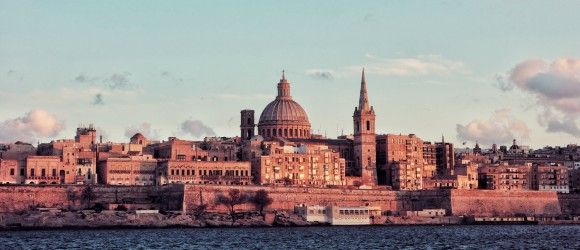
The concept of pika is a cornerstone of Maltese culture; it’s written into the skyline of the capital Valletta, and permeates across all walks of life.

  • By Justin Calderon

8 January 2019

There is a competitive nature that permeates through Malta so raw and unbridled that it’s written into the skyline of its capital, Valletta, and permeates across all walks of life on the archipelago.

I’m talking about pika – a Maltese word that roughly means ‘a neighbourly rivalry’, but is one of those terms that feels like a fool’s errand when foreigners try to interpret it.

Pika is, as Professor George Cassar, who teaches heritage and cultural tourism at the University of Malta explained, what drives Maltese to outdo their immediate rivals. Usually, this rivalry involves followers of different saints within the same town – a ‘this-town-isn’t-big-enough-for-both-of-us’ attitude – and ranges from benign sportsmanship to premeditated aggression.

 “Pika is what drove the Maltese in 1958 to tear down and rebuild the Carmelite Basilica that today defines Valletta’s horizon with a 42m-high dome, just to overshadow the Anglican Cathedral next door,” he said.

Pika is also what brought about a man getting hit over the head with a flowerpot, according to the Times of Malta, during a festival in August last year. Meanwhile, just less than two weeks later, two parishes exchanged sacrilegious insults about their rivals’ Virgin Mary statue – ‘Ours is the most beautiful statue. Yours is the ugliest in Malta’; also an example of pika.

That these last two events took place so close in time is no coincidence. Every year, Malta’s festa season, when villages celebrate their patron saints by throwing big feasts, peaks between June and September. At this time, pika summons the islands’ hot-blooded Mediterranean spirit to the fore, as parishes compete in a paradoxically sacrilegious celebration of the sacred. Rivalries have become so intense that festas have had to be partially cancelled, the most recent in 2004, due to the threat of violence.

Year after year, followers of respective patron saints attempt to outspend and outdo their neighbouring parish in a contentious crusade for showmanship that seems truly fit for the descendants of the Knights Hospitaller, the medieval sect of Catholic warriors from Jerusalem that ruled Malta for about 300 years from 1530. To this day, Maltese festa pageantry, artefacts and ornaments take cues from the Baroque style that defined the 17th- and 18th-Century architecture of the Order of St John, such as the hand-held carriage that transports the statue of the saint to the festa’s main stage, and the hand-carved wooden centrepiece for the Sunday feast. In recent years, festas have included competing theatre companies and a new record for hoisting 711 flags in a village.

Got the back to work blues?

Try a system to get you out of it. Fact: you have to go back to work, even if you don’t reallllly want to. You might as well enjoy it!

This article goes over a few game plans to go back to enjoying your work, and to get over your holidays with a smile on your face.

Click for original article.

Why I’ll always have work

It’s true… for some reason, here in Spain, people share a common trait which has guaranteed, and continues to do so… that I will always have a job.

I’ll give you a hint:  Among other things, I’m an English teacher.

The common trait (you might be asking yourself)?

El sentido del ridículo

This may work against me (if you were to adhere to my words, English may commence to open doors for you instead of creating barriers… meaning that I would eventually be out of a job), but I am going to share a personal anecdote with you.

I am from the outskirts of a small city, rural Canada.  For some reason I had always wanted to come to Spain.  Of course, my parents said “no”.  I started asking and stating my intentions when I was around 11 years old.  By the time I was 13 or 14 – they were fed up with my petitions, and told me, ok… as long as you pay for it, you can go.  So… I worked however I could (mostly baby-sitting and odd jobs).  At 15 I started my own company – so to say.  I had a lot of help, but, it still was a big deal.  The youth job co-op.  It worked!  I came to Spain for the first time when I was 16 on a student exchange.

The story doesn’t stop there.  Before I arrived – I thought to myself.  “How can I decide that I want to move to Spain for the rest of my life if I haven’t seen the rest of the world?”.  So – I devised a plan to study in Germany for a year.  This was actually more difficult than what it seemed.  One thing was to study in Spain for three months – quite another to finance a year of studies in Germany.  So what did I do?  I did my research – and created a scholarship.  I went door to door to the local businesses, pitched my speech at the local Rotary Club – did whatever I could (at 15 – 16 years of age), created interest, and got the local club involved.  Simple, right?  WRONG… once they became involved, they had to do things the “right” way… so, after all of that previous work – I had to compete to get accepted into the program!    UFFFFFF.  What more, the decision was made at a higher level – not in my city.  I had to prove that I had been studying German for three years (which I had not) – have good grades, etc.  Well – in the end – I got in.  Once I had been accepted, they told me, it was to go to Brasil, not Germany.  Only at the last minute (a week before departure) did I find out that yes, after all, I could go to Germany.

So—all those years of saving, creating a business, creating a scholarship, etc. etc. etc.  Do you know what happened?


I got to Germany – and everybody there, I mean, everybody who I encountered – wanted to practice their English with me!

I couldn’t believe it.  Yah – right.  My response was simple, and quite obvious:  “YOU go to Canada to learn English – I’m here to learn German.”.  I had gone through all of that effort to get to where I was, all those extra hours, sleepless nights, dreams and hopes – to come and help you with your English? No way was I going to let this opportunity escape.

Moral of the story:

Does this sound familiar?  I mean – the way I see it – any person with a professional career – especially here in Spain (with all that we have been through over the past x years) – has put so much into their careers-  Studies, overtime, personal sacrifices, family sacrifices, etc.  Are you really willing to give that up because you have “un sentido del ridículo”?  Now – THAT is ridiculous.

So – please – get over it.  English should be an OPEN door – not a barrier.  Don’t risk all of your efforts over some contagious mentality that doesn’t even fit in with what the world thinks of the Spaniards anyways.  But that is a topic for a different day.


TIDBITS from me to you –

Some Christmas traditions – explained

Have you ever wondered why certain traditions are followed during the Christmas season?  Of course, everyone probably knows the typical cultural differences (Santa and the legend behind him, for example), and the Three Wise Men.  They don’t visit every country, however.  There are many traditions that aren’t necessarily followed here in Spain, or at least, not to the “T” (an expression which means – not exactly the same way).


  1. Why we celebrate Christmas on December 25th.
  2. Why we bake Christmas cookies
  3. Why we put up a Christmas tree
  4. Why we put lights on the Christmas tree
  5. Why we build snowmen
  6. Why we drink eggnog
  7. Why we leave milk and cookies for Santa
  8. Why we kiss under the mistletoe
  9. Why we sing Christmas carols
  10. Why we hang stockings

Are you familiar with The Readers Digest?  This in itself is a cultural difference worth noting.  Any normal household (at least when and where I grew up – in Canada) would have one.  It’s a small, thick magazine, with a wide variety of articles of interest – to basically anybody.  I highly recommend reading any of their articles – anytime – to contribute to your language learning.  It is simple, direct and natural language.

Link to original article in the Readers Digest.

My question(s) to you: 

  1. Have you ever tried eggnog?
  2. Do you personally do any Christmas baking?
  3. Do you set out Christmas stockings?
  4. What is your favourite Spanish tradition?
  5. Can you list traditions here in Spain, not mentioned in the article?
  6. Can you explain how they came to be?


so – you know the deal – let’s see the comments!

Elderly couple wins big and the reaction is priceless

This is the «million dollar question»… and it’s great for level testing in English, so, I’ve heard quite a few responses.  MUCH to my surprise… when I interview a group of people who happen to work in a bank… well, what do you think, are their responses similar?  AS a matter of fact, they are.  And I must say, quite similar to what this elderly couple has done, with a few differences.

When I use this for level testing – I’m looking for your use of the conditional.  This is the classic 2nd condition, which seems to be so difficult for most.  The use of the past to speak about something hypothetical.  hmmm.

Try using this model, and let’s see your responses.  I’m not looking for honesty, I’m looking for a good laugh, or creativity, or just a good conversation.

What would you do if you won two million Euros?

If I won (past simple) to million Euros, I would go (would + infinitive without to) on a trip around the world.  

NOW I’VE USED THAT ANSWER – so you can’t!  Please… try and not repeat previous answers 🙂


Suggestions for more comment:  comment on the Banfield’s reaction to their win.  The vocab is actually quite good for practice!


Link to original article in the Mirror:  Britain’s oldest lottery winners are staying put in house they bought for £2,000


Text for original article:

EXCLUSIVE Dennis Banfield, 87, and wife Shirley, 83, who scooped an £18million jackpot, have been married for 60 years and lived in the same house in Winterbourne, Glos, for most of them.

They could have bought a mansion, but Britain’s oldest lottery winners are returning to their modest home of 57 years – after spending four months living in a budget hotel.

Dennis Banfield, 87, and wife Shirley, 83, have been married for 60 years and lived in the same house for most of them.

They scooped an £18million jackpot in February, but rather than move into a plush new pad, the couple have opted to renovate their family home.

They brought up their two daughters there after buying the property in 1961 – when the average house in Winterbourne, Glos, cost just £2,000.

Speaking outside the hotel yesterday, the couple said they are looking forward to moving back into their home before Christmas.

Shirley said: “We decided to stay in the house and just have the whole of the inside of it completely redone.

“We’ve been there for 57 years now. We know the area, the house is not overlooked, it’s got a lovely big driveway.

“We’ve gone back to see it as it’s been done up.

“There’s still a bit of a way to go on it, but we’re hoping to move back in within the next fortnight – we’ll definitely be back in in time for Christmas.”

The three-bed property has a current estimated market value of £316,000.

The front garden is still full of fittings that have been torn out for the renovations and a large skip in the front garden is full of plasterboard – with a decorator’s van and a skip parked outside.

But the generous couple, who have given away a lot of their winnings to charity, revealed they are simply looking forward to moving back and spending a quiet Christmas at home with family.

That includes their daughters – with whom they split their lottery winnings.

The elderly couple also revealed they had told Tina, 55, and Karen, 52, that they always played for them, to secure their future.

The Banfields split the money three ways, Tina and Karen getting just over £6million each, with Dennis and Shirley keeping the remaining third for themselves.

Shirley said: “They have both bought new houses with their share of the money. It means a lot to us to know they are looked after.”

As to their own share, Shirley explained: “We’ve given a lot of it away in lump sums.

“We’ve been able to give to the cancer units, to the children’s hospital, as well as helping out our community in Winterbourne – and giving to the chapel and the community association.

“I wouldn’t say the money has changed us – it’s only prompted us to better other people.

“We can’t exactly go jetting off on a round-the-world adventure at our age.”

However, when the couple won the £18,139,352 jackpot in February, Dennis had to wipe away tears of joy as his family revealed it was he who had bought the ticket form his local shop.

Dennis, who worked for 40 years at South Western Electricity Board, said at the time: “All that has ever mattered to Shirley and I is that the girls are OK. To know they are, is a wonderful feeling.”

He added: “While I didn’t think I would be interested in a new car, it is rather tempting.

“Although, with my dodgy knee, I might need to get a chauffeur to go with the car.”

Meanwhile, the search for the winner of a £76million lotto prize is intensifying, with just days to go till the 5pm Sunday deadline.

The winning ticket was bought in the Boston and Skegness region of Lincolnshire for the November 2 draw.


British Slang

Link to original video on Youtube

Both of these actresses have an excellent pronunciation.  I have a feeling that many of our students would be surprised at the lack of vocabulary that both continents share.

The truth is, slang, or even everyday sayings are quite particular to specific areas.  so – no – I didn’t know ANY of these expressions!  Now – my question for you – did you get any of them from either the American version or the British version?  HA – let’s see what you have to comment!


Below is the transcript – but if I were you, I wouldn’t look the first couple of times around.


I’m Emma Stone and I’m Rachel Weisz and
00:02
Emma’s here to teach me some British
00:04
slang yeah well I mean she’s really
00:06
gonna teach me that British thing please
00:08
tell me what is happening here
00:12
Bob’s your uncle I never really know
00:15
what this one means Bob’s your uncle
00:17
means like I thought it was gonna rain
00:18
on my wedding day and it rains it bumps
00:21
your uncle it rained it means like like
00:23
of course it did yeah of course it did
00:25
yeah whoops your uncle’s okay I don’t
00:27
get it it’s a slippery time this is
00:29
slippery turn it’s a little it’s a
00:31
fully-charged yeah throw a spanner in
00:33
the works that’s like when something
00:34
gets messed up like a throw spanner in
00:36
the word exactly okay you would say in
00:37
America a wrench a wrench in the works
00:41
winch okay yeah you would kind of you’re
00:45
British at this point thank you there’s
00:48
no idea a scouser
00:50
is somebody from Liverpool yeah a
00:53
Liverpudlian and Liverpudlian so the
00:54
beetles are scousers my husband is a
00:56
scouser
00:57
and that’s not offensive no no it’s it
00:59
weird to be sounds like it could no no
01:00
no one is discussing with great pride
01:03
okay right right yeah roll you know that
01:06
one no I don’t you know toy ways a bong
01:08
yeah yeah cuz the toilets the bog the
01:11
toilets the boggy bog world is the
01:12
toilet paper right okay great yeah we
01:15
run our book roll oh okay
01:17
lost the plot oh you know that one
01:19
that’s like you’ve you’ve kind of gone
01:21
off like I really lost the plot I have
01:22
no idea what’s going on yeah exactly
01:24
yeah yeah yeah one point dog Center oh
01:28
that great or bad I would say bad yeah I
01:32
make she made a dog’s dinner out of that
01:34
painting she was doing oh she ruined it
01:36
it’s not like really tight it’s like
01:38
joke it’s like she messed that up I made
01:40
it right ah
01:41
total dog center of the center view
01:43
thank you go up the Duff oh yeah no
01:47
rather lovely thing it means to be great
01:49
with child to get pregnant yeah she’s up
01:54
though yeah he’s up the dog yeah she’s
01:55
up the Duff her Majesty’s pleasure
01:57
making light of being in prison because
01:59
you’re in the jail’s of her majesty
02:01
so it’s a kind of ironic I guess
02:04
pleasure to lock you up
02:05
exactly horses for courses so who says
02:08
for courses would be like you say to me
02:10
I only like wearing
02:11
jeans and I say well I need like wearing
02:13
skirts and we go yeah horses for courses
02:15
it means like everyone likes different
02:16
things there’s many different courses oh
02:18
I did Oh like that or this of course
02:20
this is that’s like cheapest chips I did
02:24
that one you don’t know cheap as chips
02:25
no likes cheapest chips like this is not
02:28
expensive cheapest I think that’s like
02:29
an old-fashioned kind of dumb Blighty
02:35
oh isn’t that cloudy no just means
02:37
England I’ve no idea why but you just
02:39
said I’d love to go back to Blighty I
02:41
wish was in Blighty like that I thought
02:43
it meant cloudy which basically is
02:45
synonymous with England thank you guys
02:46
great yeah chock-a-block
02:51
wait I feel like I’ve heard this one
02:53
before um it just means yeah there was a
02:55
lot of traffic it was chock-a-block
02:56
well that party was there’s so many
02:58
people that was just cha like a mother
03:00
custard a wrap exactly
03:03
total right yeah yeah ours is so much
03:05
more eloquent American one a wrap or a
03:09
chocolate block okay
03:11
tickety-boo no idea everything’s
03:12
tickety-boo means everything’s wonderful
03:14
that’s so cute bagsy IG means like if
03:19
you’re a kid and there were two presents
03:21
and two kids you go you got white bags
03:23
you that one oh my cute dibs what does a
03:25
man dip is that tips yeah just like um
03:27
there’s two things right there it’s like
03:28
dibs on that one that’s why I get that
03:30
one we say oh I see that
03:31
oh okay so if a guy’s let’s try this at
03:36
home
03:36
as in Judy as in she’s great wait a
03:39
second the modern-day youth say Dench as
03:42
in Judy Dench and it means something’s
03:44
really great that is so cool that’s like
03:47
people in our country being like that’s
03:48
pretty straight we say youth youth the
03:51
youth yeah you say Dench
03:53
for you that’s Dutch budge up scoot over
03:56
I know there’s a family that one is it
03:58
confusing for a while and then when you
03:59
get used to it you just went over
04:02
cack-handed can’t caring to me is like
04:05
clumsy got it yeah okay oh that’s good
04:07
cat camp yeah cack-handed cons fall up
04:10
is that just like a dope no logical has
04:12
a loaded load of rubbish
04:13
load nonsense oh that is such a load of
04:15
codswallop I just absolutely not true
04:18
not true or false
04:19
yeah and like he made it up it was just
04:21
codswallop I’m using
04:23
we use that a lot Curtin Twitter yeah I
04:25
can’t which means like if you live in
04:26
the suburbs and you have some cartons
04:28
often made of net you might twitch or
04:30
cut-ins and have a peek out see what the
04:32
neighbors are doing it’s not a kind
04:33
thing sale she’s a real Curtin twitch of
04:35
that she’s like I mean oh yeah woman who
04:39
sits at home yeah like yeah checking out
04:41
what the neighbors do faff oh it was
04:43
such a faff to get here like it was hard
04:45
it was a struggle it was a struggle so
04:47
that was a fast it was a fact yeah has
04:49
this been a faff this has been not a
04:51
path what is this here this has been
04:53
plain sailing it’s hot a bit a dog’s
04:55
dinner no no it’s pretty dense

What would it take to move somewhere similar?

I came across this gem of an article yesterday.  It contains a series of mini-interviews with different people who had decided at some point to move to this remote village, only accessible by boat or a rugged hike.  Who would do that, and why?  You may be surprised, it’s not a village full of criminals, I’ll tell you that!

Suggested work:

  1. Write down a mini description of who you think would just pick up and leave to take on such an endeavour.
  2. Describe the type of village that you actually would move to, if you had to live off the grid.


On a remote peninsula in the north-west Highlands of Scotland is the small off-grid community of Scoraig.

Accessible only by boat or a five-mile walk, the residents of Scoraig live in relative isolation, partly powering their homes and school with wind power. Among the inhabitants are crofters with cattle and sheep, a violin maker, a Russian translator, volunteers and a part-time postal worker.

Earlier this year, photographer Ed Gold lived alongside the community, documenting people’s lives and exploring what drove them to move to this remote location.

Lisa, 54

«I have been here 23 years. I don’t think it is very remote really in the sense that people think about remoteness – but it’s inaccessibility, which I think is appealing.

«It’s by no means idealistic and it has its own hardships of the wind and the rain.

«You are exposed to the elements – but that’s good also as you are aware of what the weather is doing all the time and you’re very much in touch with nature and the elements and life.

«We’re an ageing population but I guess the bulk of us are between 40 and 65.

«There are not so many people that are younger than us, apart from the kids obviously.

«I am the post-person three days a week, sub-contracted by the Royal Mail.

«I am responsible for everybody’s important post and for transporting it across the loch as dryly and as safely as possible.

«I have a sea-taxi business, which runs a regular sea-ferry service, but a lot of people have their own boat and there is also a communal boat.»

Hugh, 65

«I came here in 1975. I was brought up in Edinburgh and my background is in maths and physics.

«When I first came to live here, we didn’t have electricity in the first few years.

«Wind seemed like an obvious way to make power and was a very exciting way to produce renewable energy.

«I was active earlier than a lot of others with wind power.

«There was a time when if you typed «wind power» into Google, my webpage was on the first page that came up – but those days are long gone.

«Through the internet, I have a large international network of design enthusiasts that follow, like and continue to use my design approach and teaching courses.

«I live here because it is very beautiful and I like the off-grid lifestyle.

«It’s not about moral superiority – it’s more to do with having more control over your own hands-on environment.

«It’s attractive to me to grow my own veg and make my own power rather than be part of a big machine.»

Luke, 36

«I grew up on the Isle of Wight and didn’t leave until I was 17.

«After my apprenticeship, I built aluminium catamarans for offshore wind farms and large blades for wind turbines – but I was after something that was more manageable that was easier to build for myself.

«A friend of mine stumbled across this place.

«He was travelling across Ireland and Scotland and came across Hugh’s name and that he was building windmills.

«So that was how I found out about here and it inspired me.

«We also used to come up to Scotland on holiday although we only moved four years ago.»

«It was good for us to move up here – no regrets really.

«The biggest downside is the high school being in Ullapool, so the kids will have to go and stay away all week and that will be difficult for us as we are a close family.

«As the children get older we want them to have the independence to build their own dwellings here.

«They might all want to move away and do their own thing – but it is a great stepping stone to have their own land and it’s a big achievement from a young age.»

Chisa, 28

«If you speak to anybody here, they will all say that they are getting away from the value system that tells you you ought to be this way or that way, to be valued by your peers or whatever it is which doesn’t resonate with everybody.

«They are trying to create their own idea of utopia.

«I’m here for more selfish reasons – I don’t want to be surrounded by other people’s judgements.

«I have now been here for five years. I came here as a couple, with our son, but we have now split up but still both live here.

«Every year, I go back to Russia and leave my son with my ex.

«I love it because I enjoy the ballet I can do there and I prefer the mentality, the toughness and resilience to change.

«Russians have an ability to withstand anything.»

Bev, 79

«I was living in rural Northants, a nine-to-five scientist working for an electronics company in a laboratory.

«My wife, Gill, and I came up here for a holiday and we got hooked on the idea of living here.

«For one thing, I’d always wanted to build my own house and Gill liked the idea as there was a good primary school here for our three children.

«It was much more difficult to get here in those days, lots of single track roads and we didn’t have reliable motors on our boats and only one telephone box and no mobile phones.

«When we had visitors, they’d write a letter to us and we’d tell them to drive on to the pier in their car and we’d look out for them with our binoculars.

«I got a job as the part time postman when we moved up here and did that for eight years, by which time I had got a reputation as a violin maker so I gave up the post.

«Most people go to a violin school – but I had a young family at the time, so I couldn’t afford that.

«I taught myself from books and other makers – I used to go to exhibitions and competitions.

«I won a national violin-making competition in 1986 that gave my career a boost.

«The census records in 1871 say there was over 380 people here, all Gaelic speakers.

«You can just see how many ruins there are around here and each one would have been supporting a large family.

«It was worrying a few years ago when the primary school population went down to two but now it is seven and a lot of babies are in the pipeline too.»

Aggie, 65

«The first time I came here, it just felt like home to me. It was November 1975.

«It worried me slightly that we moved here as I cannot swim and I had young children.

«We needed somewhere to live and it wasn’t enough to put me off as we had the option to walk in and out as well.

«I like living here because I like to know where everything comes from, to know myself what the situation is with my electricity and what to do when it goes wrong and the same goes for the water too.

«I think we were very lucky to have Hugh come here and do his windmills.

«By now, I guess, solar would have come in if wind hadn’t – and we were just relying on Tilley lamps.

«Everybody expects washing machines now here and everybody has one apart from me. I’m the last person washing by hand here.»

Natalie, 37

«I’ve had five visits here now as I’m interested in communities.

«Some sailors I met on Shetland called me a drifter and I quite liked that.

«Somebody wrote a song abut me called Natalie the Nomad. It’s what I do – I just drift along with what’s happening.

«I think it would be easier for my parents if I lived an ordinary life – they struggle and they worry. But I have never met anyone who gives me a hard time.

«People try to get me into the ordinary – it’s hard for people to understand that I don’t want a job or to pay the price for what comes with it.

«Generally, if you have a job you are part of the monetary system. I do spend money – but it’s a choice.

«I mean, when do you ever really have to spend money? You can always say no. What do I really have to do in life, except breathing?»

Dale, 47

«I was fed up with working in an office all day looking at a screen and having to pay to go to a gym to keep fit.

«I was fed up with all the people – it would take me 40 minutes to drive seven miles to get into work.

«We could have moved not so far away but I had been to Scotland a few times and fancied it.

«There is a proper sense of community here, which I think is lacking in other parts of the country.

«Everybody knows everybody and everybody helps each other out.

«It’s the environmental thing, where you can live from solar and wind power and you don’t need coal and nuclear power.

«And because you know what you are consuming, where your water comes from and your power, you are always going to be environmentally friendly.

«I used to preach about environmental stuff and then go home and put my 48in flat-screen TV on – but here, you can really live it.»


Esta web utiliza cookies propias y de terceros para su correcto funcionamiento y para fines analíticos. Contiene enlaces a sitios web de terceros con políticas de privacidad ajenas que podrás aceptar o no cuando accedas a ellos. Al hacer clic en el botón Aceptar, acepta el uso de estas tecnologías y el procesamiento de tus datos para estos propósitos. Más información
Privacidad
Ir al contenido